

Tagetes Oil: From Fields to Fragrance – Exploring Nature’s Distinctive Essential Oil

Nature offers a wide variety of aromatic plants, each with unique fragrances and valuable properties. Among them, Tagetes Oil, also known as Marigold Essential Oil, is valued for its distinctive fresh, green, fruity and herbaceous aroma. It finds applications in the fragrance, perfumery and selected personal care industries.
At Aromatic And Allied, we believe in understanding every stage of an aromatic ingredient's journey, from cultivation and harvesting to extraction and quality evaluation.
Understanding Tagetes Oil
Tagetes Oil is primarily obtained through the steam distillation of the flowering aerial parts of Tagetes minuta, an aromatic annual herb belonging to the Asteraceae family.
Its complex aromatic profile contains naturally occurring compounds such as tagetones and ocimenes. The oil's composition and fragrance may vary depending on geographical origin, climatic conditions, harvesting stage and distillation practices.

Tagetes Cultivation and Harvesting
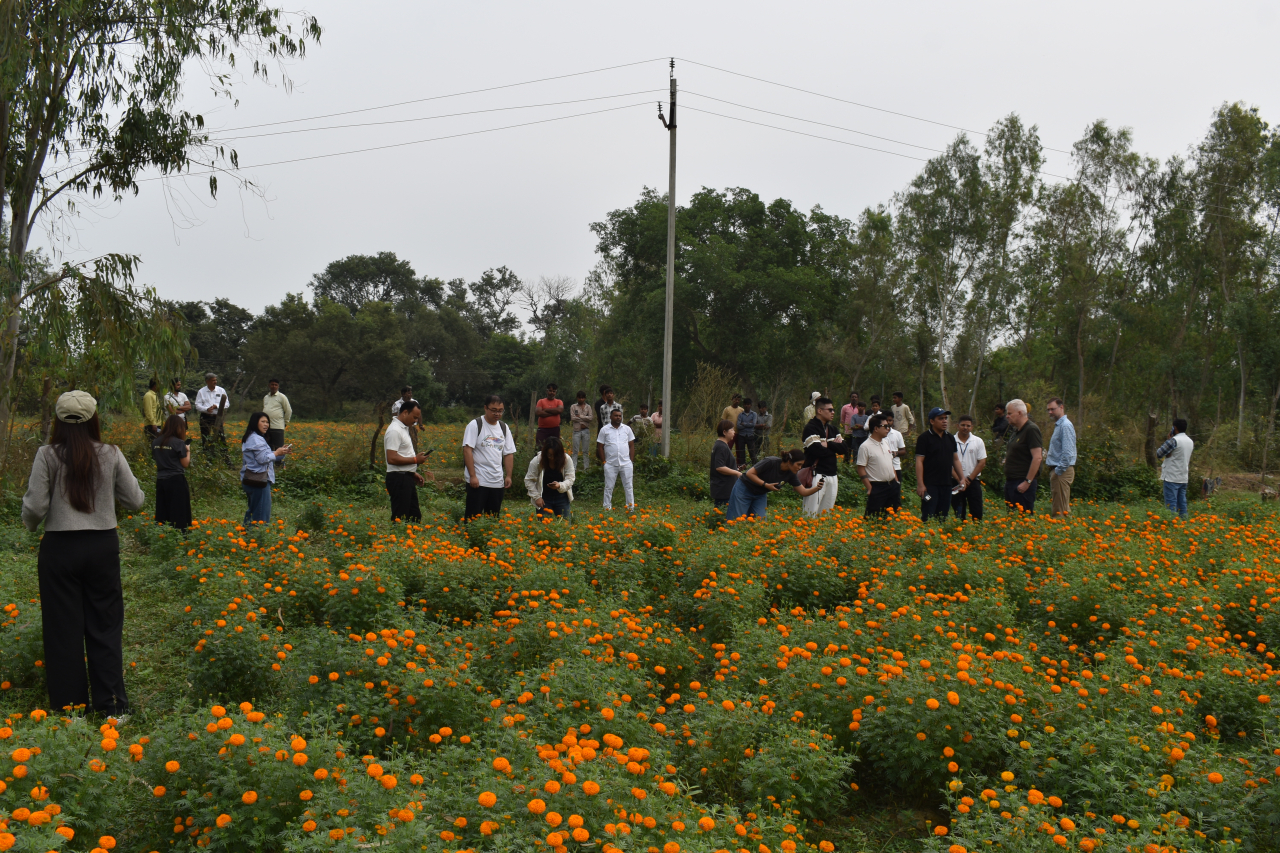
Tagetes is generally cultivated as a seasonal crop in India, with sowing commonly undertaken during the monsoon season, particularly between June and August in many northern regions.
The plant grows well in warm climates with adequate sunlight and well-drained, fertile soil. Healthy seedlings are first raised in nurseries and later transplanted into prepared fields.
During cultivation, proper irrigation, weed management and field care support healthy plant growth. Harvesting is generally carried out at the appropriate flowering stage, when the plant's aromatic composition is suitable for essential oil extraction.

Steam Distillation: From Plant to Essential Oil
Steam distillation is the established method used to extract Tagetes Essential Oil.
Freshly harvested flowering plant material is loaded into a distillation vessel, where steam passes through the botanical material and carries its volatile aromatic compounds.
The vapour is then condensed into liquid form. The essential oil separates from the aromatic water and is collected for further processing, filtration and suitable storage.
Careful handling and controlled distillation practices help maintain the oil's characteristic aroma and quality.
Quality Evaluation and Storage
Tagetes Oil quality depends on several factors, including crop origin, harvesting maturity, climatic conditions and distillation practices.
After extraction, the oil is evaluated for its physical and chemical properties. Analytical techniques such as Gas Chromatography (GC) and Gas Chromatography-Mass Spectrometry (GC-MS) help assess its composition and characteristic constituents.
Proper storage in tightly sealed containers, away from excessive heat, light and air exposure, helps preserve its aromatic characteristics.
Applications of Tagetes Essential Oil
Tagetes Oil is valued across different industries for its distinctive fragrance:
- Fragrance and Perfumery: Its fresh, green and fruity notes make it an interesting ingredient in fragrance compositions.
- Personal Care and Cosmetics: It may be used in selected formulations, subject to suitability and safety assessments.
- Flavour and Fragrance Industry: Its specialised aromatic profile makes it an ingredient of interest for fragrance developers and selected flavour applications, subject to applicable regulations.

Connecting Agriculture with Natural Aromatic Ingredients
The journey of Tagetes Oil highlights the connection between farmers, agricultural practices and essential oil processing. From seed sowing and cultivation to harvesting and steam distillation, every stage contributes to the quality of this distinctive natural ingredient.
At Aromatic And Allied, we are committed to bringing nature-inspired ingredients to global industries through botanical expertise, responsible sourcing and quality-focused processing.
Tagetes Oil is another example of how nature's botanical diversity creates valuable opportunities for the global fragrance and personal care industries.